About Aluminium Cube
High Performance Aluminium cubes are made for high end use. These are offered to clients after a hardening heat treatment. The wall thickness of these cubes can be adjusted according to load. These are popular as the specifically designed hydro formed shapes. High Performance Aluminium cubes are needed for many production processes. These are needed for the stiff as well as high performance applications. Offered profiles are infinitely recyclable, lightweight and durable structures of reduced energy costs. Utilization of the cubes ensures less carbon emissions.
Precision Engineering for Diverse ApplicationsOur aluminium cubes are meticulously fabricated to stringent international standards such as ASTM B221 and EN 573-3. Each unit offers exceptional dimensional accuracy and surface quality, making them ideal for precision machining, laboratory analysis, and educational experiments. The combination of lightweight structure and high tensile strength broadens their utility in various sectors.
Superior Material Properties and CustomizationManufactured primarily from industrial-grade aluminium alloys like 6061-T6, 6082, or 7075, these cubes feature high machinability, Brinell hardness of around 95 HB, and excellent thermal and electrical conductivity. Customers can specify grades, temper, and surface finishes to suit specialized needs. Applications range from prototyping to decorative items, benefiting from the cubes' corrosion resistance and full recyclability.
FAQ's of Aluminium Cube:
Q: How is the aluminium cube typically used in machining and prototyping?
A: The aluminium cube's high machinability and customizable dimensions make it ideal for CNC machining, milling, drilling, and other precision manufacturing tasks. It is widely utilized for creating prototypes, functional test pieces, and calibration blocks in laboratories and workshops.
Q: What process is followed to manufacture these aluminium cubes?
A: Each cube is precisely cut and surface-finished from industrial-grade aluminium or alloy bars. The process involves measuring, cutting to exact dimensions, and applying desired surface treatments (such as mill, mirror, or brushed finish), adhering to standards like ASTM B221. Optional treatments like anodizing can enhance corrosion resistance.
Q: Where are the typical applications of aluminium cubes?
A: Aluminium cubes are used in a range of fields including engineering education, laboratory testing, quality control, decorative displays, metalworking, and as reference standards for density or material property demonstrations.
Q: What are the primary benefits of choosing an aluminium cube for projects?
A: The cubes offer a high strength-to-weight ratio, superb corrosion resistance, and excellent thermal and electrical conductivity. These features, combined with 100% recyclability and compliance with RoHS and REACH, make them an eco-friendly and versatile choice for various projects.
Q: When should I consider anodizing the aluminium cube's surface?
A: Anodizing should be considered if the application requires enhanced corrosion protection, increased surface hardness, or a specific decorative finish. This treatment is recommended for cubes exposed to harsh environments or for aesthetic preferences.
Q: How can I ensure the right aluminium grade and temper for my needs?
A: Discuss your application and requirements with the supplier, specifying if you need pure aluminium or a specific alloy (like 6061, 6082, or 7075) along with the required temper (such as T6 or T651). This ensures the cube is tailored to deliver the necessary strength, machinability, or corrosion resistance for your use case.


 Send Inquiry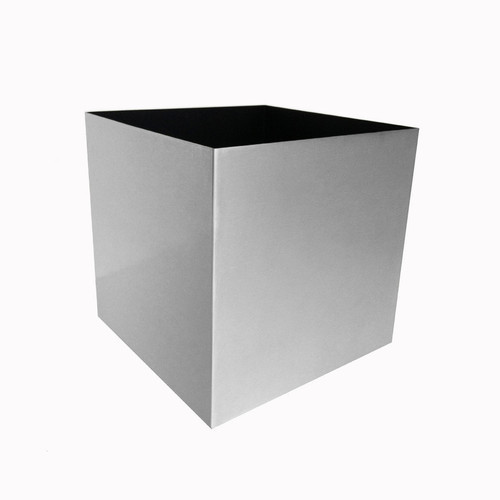

 Send Inquiry



 Send Inquiry
 Send Inquiry
 Send SMS
 Call Me Free
 English
 Spanish
 French
 German
 Italian
 Chinese (Simplified)
 Japanese
 Korean
 Arabic
 Portuguese